Gordon Ward on Hyperbaric Medicine
Posted by Tamisan Bencz-Knight
on Jun 17, 2014
Hyperbaric Medicine
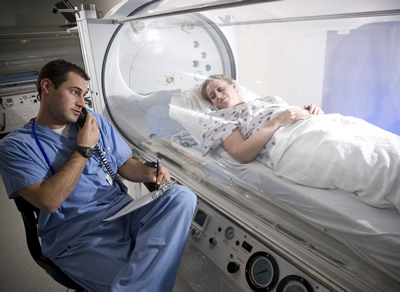 Hyperbaric medicine, also known as hyperbaric oxygen therapy (HBOT), is the medical use of oxygen at a level higher than atmospheric pressure. The equipment required consists of a pressure chamber, which may be of rigid or flexible construction, and a means of delivering 100% oxygen. Hyperbaric Oxygen Therapy found early use in the treatment of decompression sickness, and has also shown great effectiveness in treating conditions such as gas gangrene and carbon monoxide poisoning.
 In a hyperbaric oxygen therapy room, the air pressure is raised up to three times higher than normal air pressure. Under these conditions, your lungs can gather up to three times more oxygen than would be possible breathing pure oxygen at normal air pressure. Your blood carries this oxygen throughout your body, stimulating the release of substances called growth factors and stem cells, which promote healing. Essentially, hyperbaric medicine is used to control the gasses in the body because uncontrolled gasses will kill you. Astronauts, miners and military pilots all use the hyperbaric oxygen therapy due to the nature of their work.
More recent research has examined the possibility that it may also have value for other conditions such as cerebral palsy and multiple sclerosis, but more research is required. Gordon is a firm advocate that the proof is available. Gordon’s son, Samuel, suffered a brain injury and his ability to flourish as an individual is because of hyperbaric oxygen, specifically with the application in neonatal intensive care.
McGill University has a hyperbaric chamber that is used to treat athletes. However, at this time it has not been expanded for use to treat other ailments other than sports injuries. The chamber increases plasma oxygen transitions which helps athletes heal faster. A main problem is that the use of these procedures and technology is not a driver in the medical world, but we need to bring them into mainstream, common use. Gordon has seen the viable healing properties of hyperbaric chambers in carbon monoxide poisoning, burn and embolism treatments. By salvaging tissue for a burn victim, the chamber helps reduce skin grafting, but there is not a burn unit in Canada with a hyperbaric chamber available. For diabetics, a standard practice is to amputate; however, hyperbaric medicine is an option.
A major challenge is that hyperbaric chambers are not readily available, not commonly used, and the full “research” of what they can do is still being conducted. Gordon estimates that in Alberta alone, 14 hyperbaric chambers will take 4 years to get through the back log of the needs in Alberta for all the various uses.