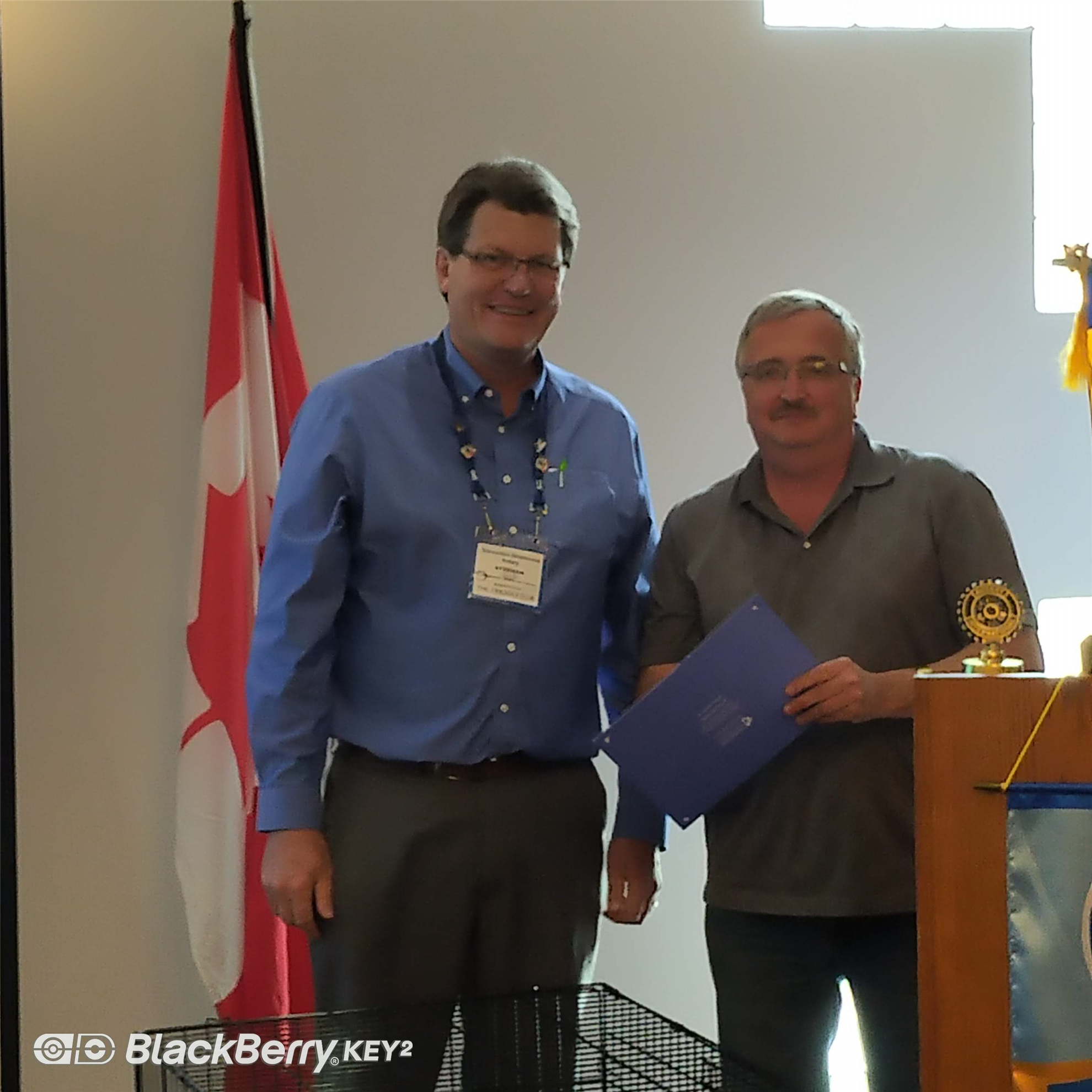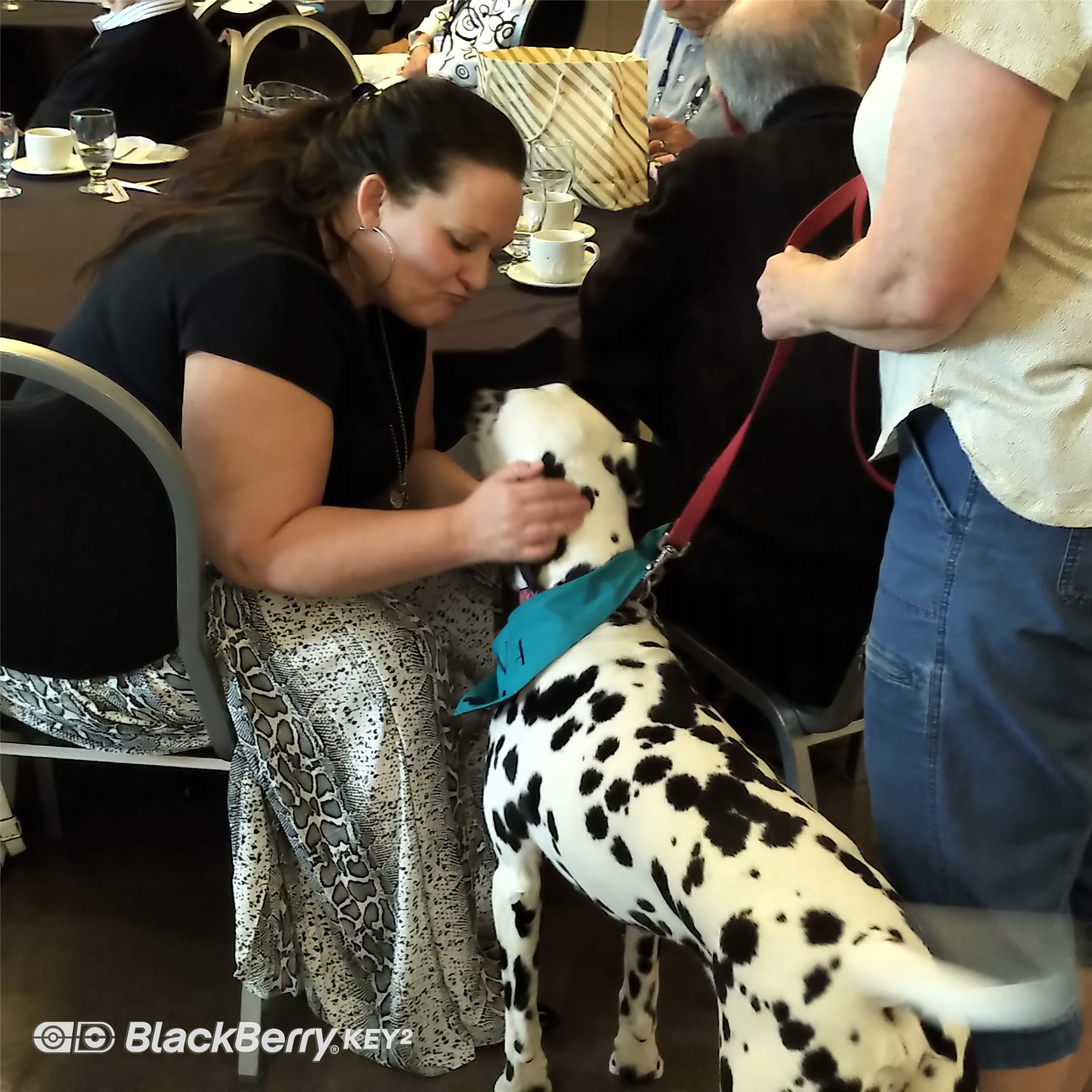
On Tuesday we had a visit from Jim and Lynn Washington and their Pet Therapy dog Nova. Jim told us that when he retired from Telus four years ago, he received Nova as a retirement gift from his wife Lynn, who is a retired school teacher. Nova is a seven-year old Dalmatian, who was a Grand Champion show dog for the first three years of his life. In the last few years with Nova, they have regularly visited the Stollery, the Grey Nuns fifth floor and Palliative Care units, and many other places. His wife does a school reading program and she likes to take Nova along for the children to read to, as it puts them more at ease reading out loud to the dog.
The Pet Therapy Society of Northern Alberta is a non-profit society that relies on membership fees, grants and donations for funding. They currently have about one hundred and seventy dogs in their membership and have between seventy and eighty places looking for pet therapy dogs. They are always looking for new pet therapy recruits. The benefits of pet therapy dogs are many, including clinical, physiological, emotional and psychological. Some dogs work with physiotherapy groups, some visit hospitals or schools, nursing homes, airports, correctional facilities and private businesses. The stress busting benefits of pet therapy dogs is endless.
Both the dogs and their handlers must undergo extensive training and evaluation before they are considered qualified. The dogs must be a minimum age of two years and must pass an initial assessment before the training is undertaken. If the dog has the right innate personality and has been socialized well as a puppy, they will be adaptable, sensitive, love people, be good mannered, have good self esteem, be calm and quiet under sometimes stressful situations, be friendly, responsive, patient and predictable. The handlers must be attentive to their dog and surroundings at all times.
For those hoping their dog may some day be a pet therapy dog, socialization when your dog is young is the key. Exposing them to lots of different people, children, seniors, people with disabilities (i.e. with canes, wheel chairs etc.), kids on skateboards, crowds of small boisterous children, loud noises like bursting balloons, and different types of buildings with hard shiny floors, crowds of people, strange equipment, riding on elevators, and different smells is important. Your dog must also have the basic training to be able to walk on a loose leash no more than three feet away, sit stay, down stay, come when called, settle on command, ignore other dogs, cats and people who are working, ignore food and other distractions, especially when on the floor as seniors homes often may have pills on the floor which could be a serious hazard for the dog. If your dog passes the initial assessment, you and your dog must then undergo about six months of training prior to the final assessment. This training teaches both you and your dog how to deal with all kinds of situations and how to keep you, your dog and the people you are visiting with safe at all times. Having your dog’s feet run over by a wheel-chair, or having your dog chase the resident cat down the nursing home hallway is not something you want to happen. Part of this training includes completing six practicums where you and your dog visit six different types of facilities and are assessed by an experienced pet therapy dog handler. Sometimes the dog is perfect, but the handler still needs work.
Jim said that being a pet therapy dog handler is very rewarding and that if he can help someone forget their troubles or their pain for even five minutes, it has been all worthwhile and their job is done. Nova does it for the attention and the treats.